Japchae (Korean Glass Noodles) Recipe
Introduction
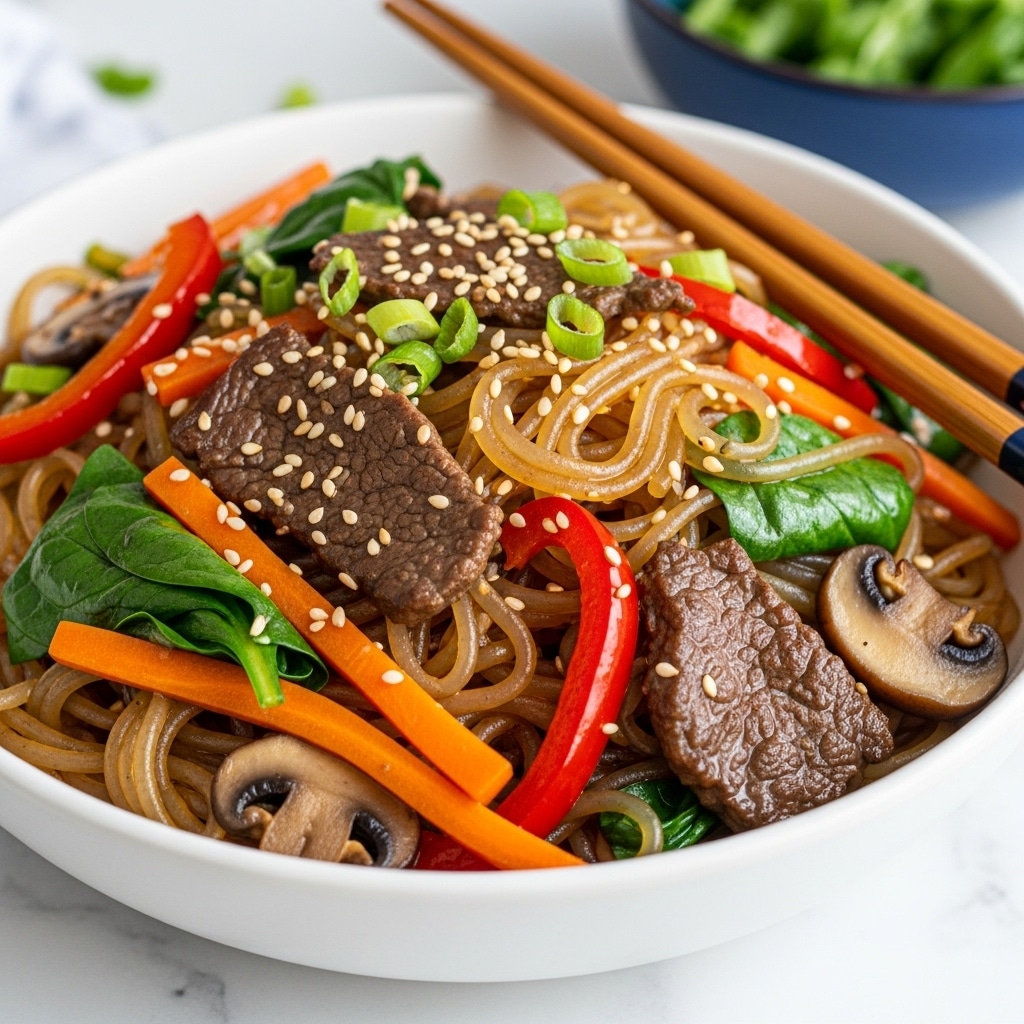
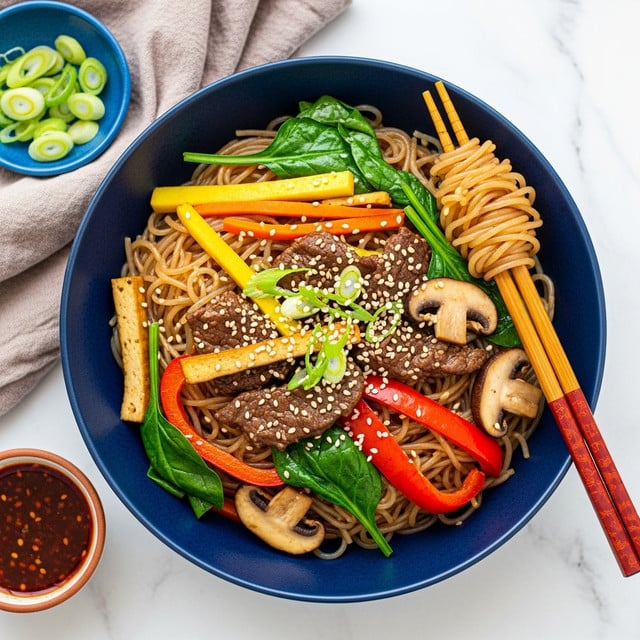
Japchae is a classic Korean dish featuring savory marinated beef, tender glass noodles, and a colorful mix of sautéed vegetables. Its balance of sweet and savory flavors makes it a delightful and satisfying meal perfect for any occasion.
Ingredients
- ⅓ cup + 1 tablespoon soy sauce or tamari (divided)
- 2 tablespoons packed brown sugar (divided)
- 2 teaspoons rice vinegar
- 4 teaspoons toasted sesame oil (divided)
- 1 ½ teaspoons minced garlic (divided)
- 1 teaspoon black pepper
- ¾ teaspoon salt (divided)
- 1 pound boneless beef short ribs (thinly sliced)
- ½ teaspoon gochujang or sriracha (optional)
- 8 ounces glass noodles
- 3 tablespoons avocado oil (divided)
- 2 large eggs
- 2 medium carrots (peeled and thinly sliced)
- 1 red bell pepper (thinly sliced)
- 1 small white onion (thinly sliced)
- 1 cup sliced button mushrooms
- 3 green onions, white and green parts (thinly sliced, divided)
- 2 cups baby spinach
- Toasted sesame seeds (optional)
Instructions
- Step 1: In a large bowl, whisk together 1 tablespoon soy sauce, 1 tablespoon brown sugar, rice vinegar, 1 teaspoon toasted sesame oil, ½ teaspoon minced garlic, and ½ teaspoon black pepper. Add the sliced beef and toss to coat. Cover and refrigerate for 30 minutes to 3 hours.
- Step 2: In a medium bowl, whisk the remaining ⅓ cup soy sauce, 1 tablespoon brown sugar, 3 teaspoons sesame oil, 1 teaspoon garlic, gochujang (if using), ½ teaspoon black pepper, and ½ teaspoon salt to make the sauce.
- Step 3: Cook the glass noodles according to package instructions. Drain and transfer to a large clean bowl. Add half of the sauce and toss to coat the noodles.
- Step 4: Whisk eggs with ¼ teaspoon salt until combined. Heat 1 tablespoon avocado oil in a large nonstick skillet over medium heat. Pour in eggs and swirl to cover the pan. Cook undisturbed for 2-3 minutes until set, forming one thin omelet.
- Step 5: Transfer the cooked egg to a cutting board. Cut in half, rotate, and then slice into ½-inch strips. Add egg strips to the bowl with noodles.
- Step 6: Heat 1 tablespoon avocado oil in a wok or large skillet over medium-high heat. Add carrots and cook for 3 minutes, stirring occasionally. Add bell pepper and onion, cooking another 2-3 minutes until vegetables soften. Transfer to the bowl with noodles.
- Step 7: Add remaining 1 tablespoon avocado oil to the wok. Once hot, cook mushrooms for 2 minutes, stirring occasionally. Add the white parts of the green onions and the spinach. Cook 1 minute until spinach wilts. Transfer these vegetables to the noodle bowl.
- Step 8: Stir in the remaining sauce to the noodles and vegetables, tossing gently to combine.
- Step 9: Heat the wok over high heat. Add the marinated beef, shaking off excess marinade. Cook 5-7 minutes until beef is seared and cooked through.
- Step 10: Transfer the beef to the bowl with noodles and vegetables. Toss to combine. Serve topped with green parts of green onions and toasted sesame seeds if desired.
Tips & Variations
- Use sweet potato starch glass noodles for the best traditional texture.
- Substitute beef with thinly sliced chicken or tofu for a different protein.
- Adjust the sweetness by altering brown sugar to your taste preference.
- Add more vegetables like zucchini or spinach for extra color and nutrition.
- For a spicier dish, increase gochujang or add a drizzle of sriracha when serving.
Storage
Store japchae in an airtight container in the refrigerator for up to 3 days. Reheat gently in a skillet over low heat or microwave until warmed through, adding a splash of water or oil if necessary to prevent drying out.
How to Serve
Serve this delicious recipe with your favorite sides.
FAQs
Can I prepare japchae ahead of time?
Yes, japchae tastes great when made ahead and stored in the fridge. Flavors deepen as it sits, making it even more delicious the next day.
What are glass noodles made from?
Glass noodles, also known as cellophane noodles, are usually made from sweet potato starch or mung bean starch. They turn translucent when cooked and have a chewy texture perfect for japchae.
Print
Japchae (Korean Glass Noodles) Recipe
- Total Time: 40 minutes
- Yield: 4 servings 1x
Description
Japchae is a classic Korean dish featuring savory marinated beef, stir-fried colorful vegetables, and tender glass noodles all tossed in a flavorful sesame-soy sauce. This recipe highlights a balanced medley of textures and sweet-savory flavors, perfect as a main or side dish.
Ingredients
Beef Marinade
- ⅓ cup + 1 tablespoon soy sauce or tamari (divided)
- 2 tablespoons packed brown sugar (divided)
- 2 teaspoons rice vinegar
- 4 teaspoons toasted sesame oil (divided)
- 1 ½ teaspoons minced garlic (divided)
- 1 teaspoon black pepper (divided)
- ¾ teaspoon salt (divided)
- 1 pound boneless beef short ribs, thinly sliced
- ½ teaspoon gochujang or sriracha (optional)
Noodles and Vegetables
- 8 ounces glass noodles
- 3 tablespoons avocado oil (divided)
- 2 large eggs
- 2 medium carrots, peeled and thinly sliced
- 1 red bell pepper, thinly sliced
- 1 small white onion, thinly sliced
- 1 cup sliced button mushrooms
- 3 green onions, thinly sliced, white and green parts divided
- 2 cups baby spinach
- Toasted sesame seeds (optional)
Instructions
- Marinate the beef: Whisk together 1 tablespoon soy sauce, 1 tablespoon brown sugar, 2 teaspoons rice vinegar, 1 teaspoon toasted sesame oil, ½ teaspoon minced garlic, and ½ teaspoon black pepper in a large bowl. Add thinly sliced beef short ribs and toss to coat evenly. Cover and refrigerate for 30 minutes up to 3 hours to develop flavor.
- Prepare the sauce: In a separate medium bowl, whisk remaining ⅓ cup soy sauce, 1 tablespoon brown sugar, 3 teaspoons toasted sesame oil, 1 teaspoon minced garlic, ½ teaspoon gochujang or sriracha (if using), ½ teaspoon black pepper, and ½ teaspoon salt. Set aside.
- Cook glass noodles: Boil glass noodles according to package instructions until tender. Drain thoroughly and transfer to a large clean bowl. Pour half of the prepared sauce over noodles and toss gently to coat.
- Cook the eggs: Whisk eggs with ¼ teaspoon salt until combined. Heat 1 tablespoon avocado oil in a large nonstick skillet over medium heat. Pour in eggs and swirl pan to cover bottom evenly. Cook undisturbed for 2-3 minutes until set as a large egg pancake.
- Cut the eggs: Carefully transfer the cooked egg pancake to a cutting board using two spatulas. Cut in half, rotate pieces 90 degrees, and then slice into ½-inch strips. Add egg strips to the bowl with noodles.
- Cook carrots, bell peppers, and onions: Heat 1 tablespoon avocado oil in a large wok or skillet over medium-high heat. Add carrots and stir-fry for 3 minutes. Add bell peppers and onion and continue cooking 2-3 minutes until vegetables soften. Transfer to the bowl with noodles and eggs.
- Cook mushrooms and leafy greens: Add remaining 1 tablespoon avocado oil to the wok. Sauté mushrooms for 2 minutes. Add white parts of green onions and spinach, cooking for 1 minute until spinach wilts. Transfer vegetables to noodle bowl. Pour remaining sauce over mixture and toss to combine.
- Cook the beef: Reheat wok until hot. Add marinated beef, shaking off excess marinade. Cook for 5-7 minutes until fat renders and beef develops a crusty sear and is fully cooked. Transfer beef to the noodle and vegetable bowl. Toss all ingredients gently to combine.
- Serve: Garnish japchae with the green parts of the green onions and sesame seeds if desired. Serve immediately for warm or at room temperature.
Notes
- Gochujang adds a mild spicy depth but can be omitted for milder flavor.
- Ensure glass noodles are thoroughly drained to prevent sogginess.
- Marinate beef for at least 30 minutes for best flavor absorption.
- Use a large skillet or wok to allow even cooking and easy tossing.
- Japchae can be served warm or at room temperature and makes great leftovers.
- Substitute beef with tofu or mushrooms for a vegetarian version.
- Prep Time: 15 minutes
- Cook Time: 25 minutes
- Category: Main Dish
- Method: Stovetop
- Cuisine: Korean
Keywords: Japchae, Korean Glass Noodles, Korean Stir-Fry, Beef Stir Fry, Glass Noodles, Sesame, Korean Cuisine, Healthy Korean Recipes