Easy Dango: Colorful Matcha, Pink, and White Japanese Rice Dumplings Recipe
Introduction
Dango is a delightful Japanese rice dumpling that’s both simple and fun to make. This easy dango recipe offers colorful, chewy treats perfect for enjoying during spring or any time of year.
Ingredients
- 1 1/3 cup Joshinko non-glutinous rice flour (150 g)
- 1 1/2 cup Shiratamako glutinous sweet rice flour (200 g)
- 3/4 cup powdered sugar (optional, 75 g)
- 1 1/3 cup hot water
- 1 teaspoon matcha powder
- 1 teaspoon water (for matcha paste)
- 1 drop pink food coloring
- 12 small bamboo skewers (soaked in water)
Instructions
- Step 1: Soak 12 small bamboo skewers in water to prevent burning during grilling or serving.
- Step 2: In a bowl, combine 150 grams of Joshinko non-glutinous rice flour and 200 grams of Shiratamako glutinous rice flour. Add 75 grams of powdered sugar if you prefer a sweeter dango.
- Step 3: Pour in 1 1/3 cups of hot water and start mixing with a spoon. When the mixture starts to come together, use your hands to knead it into a dough. Adjust by adding a little more flour or water if needed. The dough should feel like soft clay or play-dough.
- Step 4: Divide the dough evenly into three portions and place each in a separate bowl.
- Step 5: Add 1 drop of pink food coloring into one portion and knead it in to color the dough pink.
- Step 6: For the second portion, make a matcha paste by mixing 1 teaspoon of matcha powder with 1 teaspoon of water. Add this paste to the dough and knead well to make green dango.
- Step 7: Leave the third portion plain white without adding anything.
- Step 8: Shape all dough portions into small balls, about 20 grams each. Using a kitchen scale helps for even sizing. You should get approximately 36 balls in total.
- Step 9: Bring a pot of water to a boil. Cook the white dango balls first by dropping them in. When they float to the surface, cook for an additional 2 minutes.
- Step 10: Use a slotted spoon to transfer the white dango to a bowl of ice water to cool quickly.
- Step 11: Repeat the boiling and cooling process with the pink dango next, then the green dango last to avoid coloring the water.
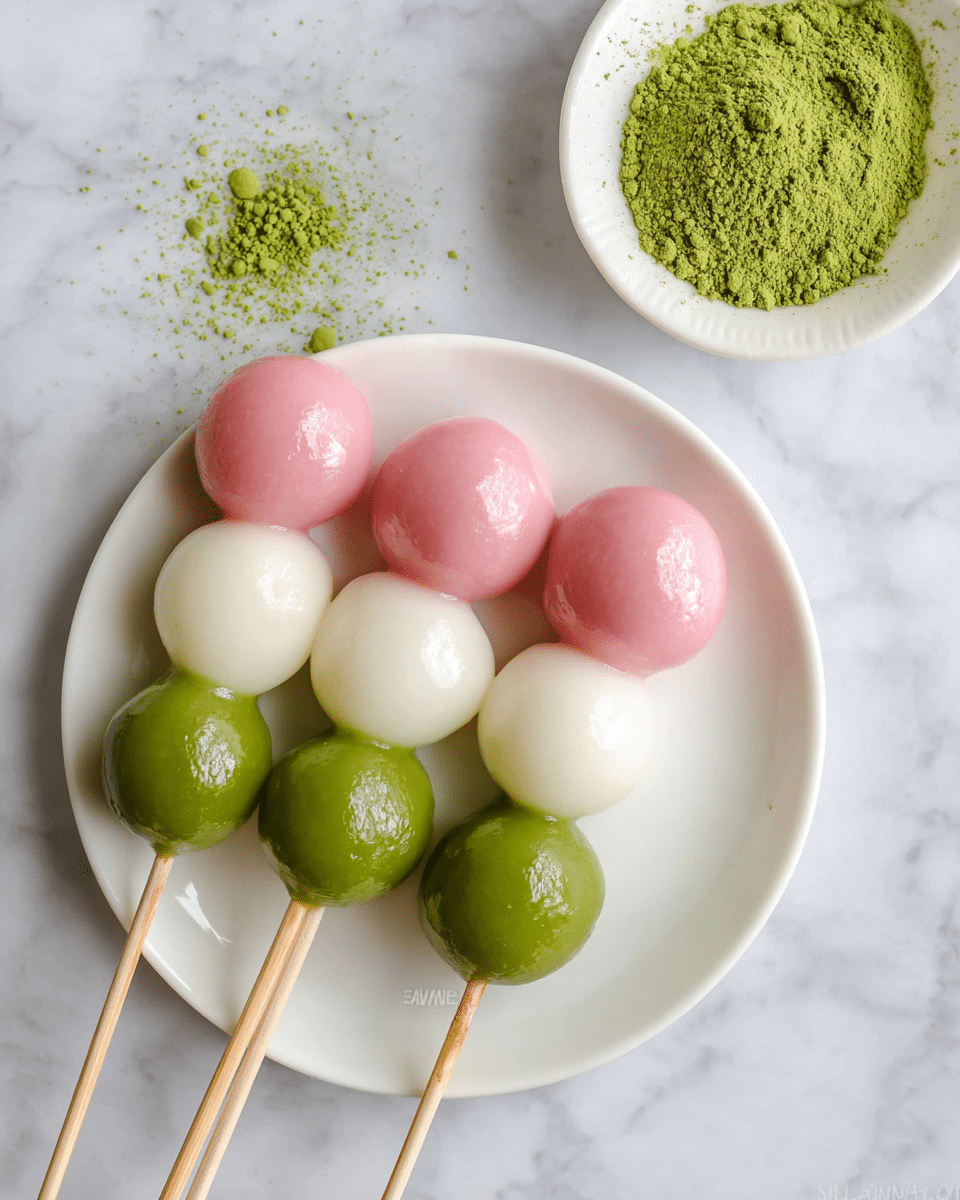
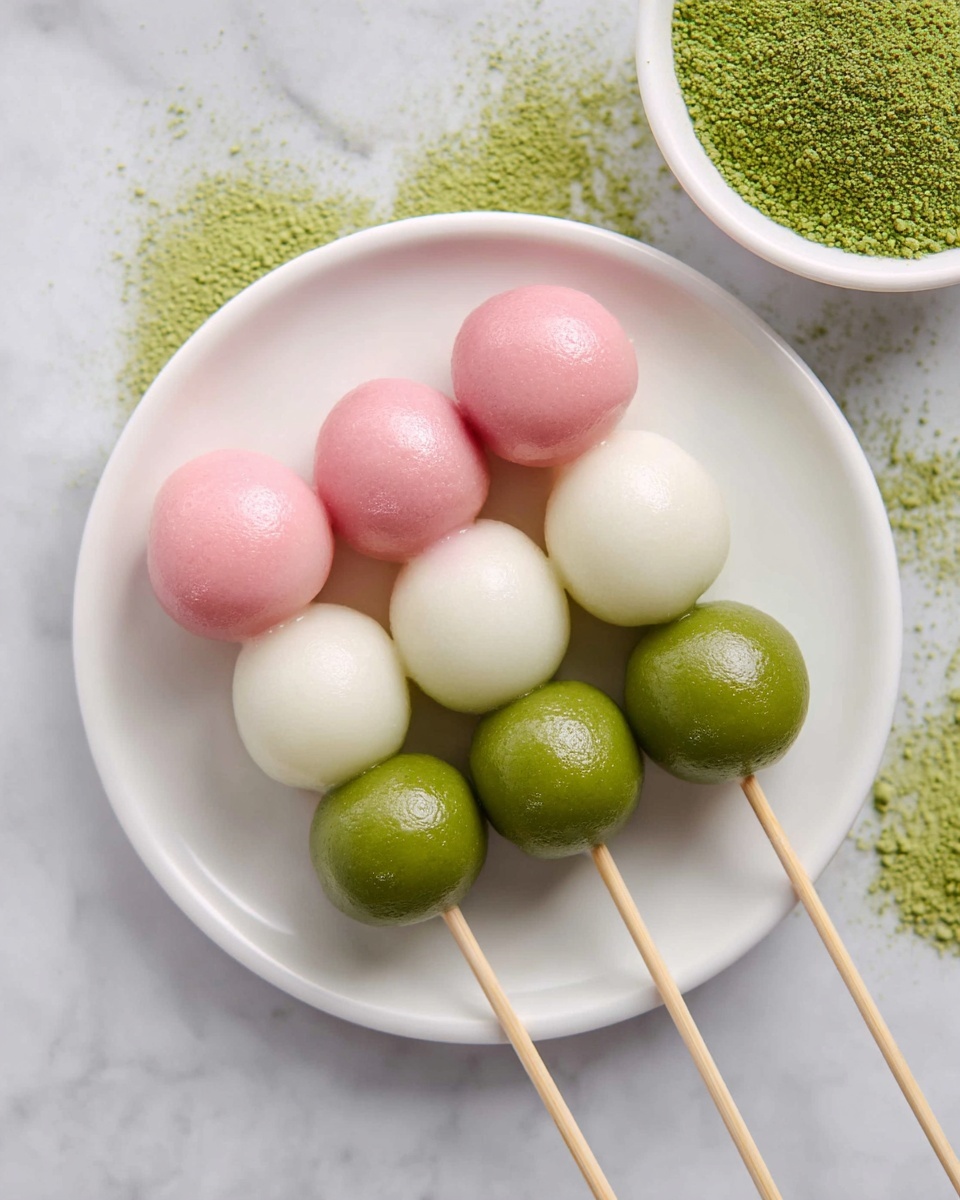
- Step 12: Skewer the cooled dango onto the bamboo sticks in the order of green first, white in the middle, and pink last. This order reflects Japanese tradition symbolizing grass, snow, and cherry blossoms.
- Step 13: Serve as is or top with sweet soy glaze, red bean paste, or matcha paste for extra flavor.
Tips & Variations
- Use a kitchen scale for consistent dango ball sizes to ensure even cooking.
- Adjust the water or flour slightly if your dough feels too sticky or dry—it should be soft but manageable.
- Try topping dango with mitarashi sauce (sweet soy glaze) for a traditional finish.
- If you want a vibrant natural pink, substitute food coloring with beet juice or strawberry powder.
Storage
Store leftover dango in an airtight container in the refrigerator for up to 2 days. To enjoy later, gently reheat by steaming or microwaving briefly with a damp paper towel to maintain softness. Avoid boiling reheated dango, as they may become too soft or dissolve.
How to Serve
Serve this delicious recipe with your favorite sides.
FAQs
What is the difference between Joshinko and Shiratamako flours?
Joshinko is non-glutinous rice flour, giving a slightly firmer texture, while Shiratamako is glutinous sweet rice flour that creates a chewy, sticky texture. Combining both balances firmness and chewiness in the dango.
Can I make dango without food coloring?
Yes, you can simply skip the coloring step and have plain white dango. Alternatively, natural colorings like matcha powder for green or beet juice for pink add gentle hues without artificial dyes.
Print
Easy Dango: Colorful Matcha, Pink, and White Japanese Rice Dumplings Recipe
- Total Time: 35 minutes
- Yield: 12 skewers, approximately 36 dango balls 1x
- Diet: Gluten Free
Description
Easy Dango is a traditional Japanese rice dumpling made from a combination of non-glutinous and glutinous rice flours, formed into soft, colorful balls that are boiled and served on bamboo skewers. This recipe includes three different colored dango—white, pink, and matcha green—that represent the seasons and are often enjoyed during cherry blossom viewing in spring. The dumplings can be eaten plain or with sweet toppings like soy glaze or red bean paste.
Ingredients
Dry Ingredients
- 1 1/3 cup Joshinko non-glutinous rice flour (150 g)
- 1 1/2 cup Shiratamako glutinous sweet rice flour (200 g)
- 3/4 cup powdered sugar (optional, 75 g)
- 1 teaspoon matcha powder
Wet Ingredients
- 1 1/3 cup hot water
- 1 teaspoon water (for matcha paste)
- 1 drop pink food coloring
Other
- 12 small bamboo skewers (soaked in water)
Instructions
- Prepare Skewers: Soak 12 small bamboo skewers in water to prevent burning or splitting during serving.
- Mix Dry Ingredients: In a large bowl, combine 150 grams of Joshinko non-glutinous rice flour, 200 grams of Shiratamako glutinous sweet rice flour, and 75 grams of powdered sugar if you prefer a sweeter dango.
- Add Hot Water and Form Dough: Pour 1 1/3 cup hot water into the flour mixture and stir with a spoon until the mixture begins to come together. Then use your hands to knead the dough until it has a soft, clay-like consistency. Adjust with a bit more flour or water if necessary.
- Divide Dough: Split the dough evenly into three separate portions and place each into a separate bowl.
- Color the Dough: Add 1 drop of pink food coloring into one bowl and knead to incorporate thoroughly. For the second bowl, mix 1 teaspoon matcha powder with 1 teaspoon water to form a paste, then knead this into the dough. Leave the third portion plain white.
- Shape Dango Balls: Using a kitchen scale, measure out approximately 20 grams of dough per ball and roll into smooth, round balls. This recipe yields about 36 balls total.
- Boil White Dango: Bring a pot of water to a boil. Drop the white dango balls into the boiling water. Once they float to the surface, continue boiling for 2 more minutes to ensure they are cooked through.
- Shock in Ice Water: Using a slotted spoon, transfer the cooked white dango into a bowl of ice water to stop cooking and firm them up.
- Cook Pink and Matcha Dango: Repeat the boiling and ice bath process for the pink dango first, then the matcha dango, to prevent color bleeding.
- Assemble Skewers: Thread the dango balls onto the soaked bamboo skewers in the order of green (matcha) first, white in the middle, and pink last. This color order symbolizes summer grass, winter snow, and spring cherry blossoms respectively.
- Serve: Enjoy the dango skewers as is or with optional toppings like sweet soy glaze, red bean paste, or additional matcha paste.
Notes
- Soaking bamboo skewers prevents burning during grilling or serving.
- The dough texture should resemble soft clay or play-dough, not too sticky or crumbly.
- Cooking colors separately prevents color bleeding and maintains vibrant hues.
- The order of skewering dango has cultural symbolism tied to seasons.
- Use a kitchen scale for consistent ball sizes for even cooking.
- Optional toppings enhance flavor but are not necessary to enjoy traditional dango.
- Prep Time: 20 minutes
- Cook Time: 15 minutes
- Category: Dessert
- Method: Boiling
- Cuisine: Japanese
Keywords: Dango, Japanese dessert, rice dumplings, matcha dango, traditional Japanese sweets, hanami snack, rice flour dumplings