Yomogi Dango with Azuki Bean Paste and Kinako Recipe
Introduction
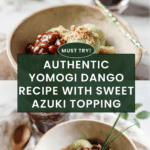
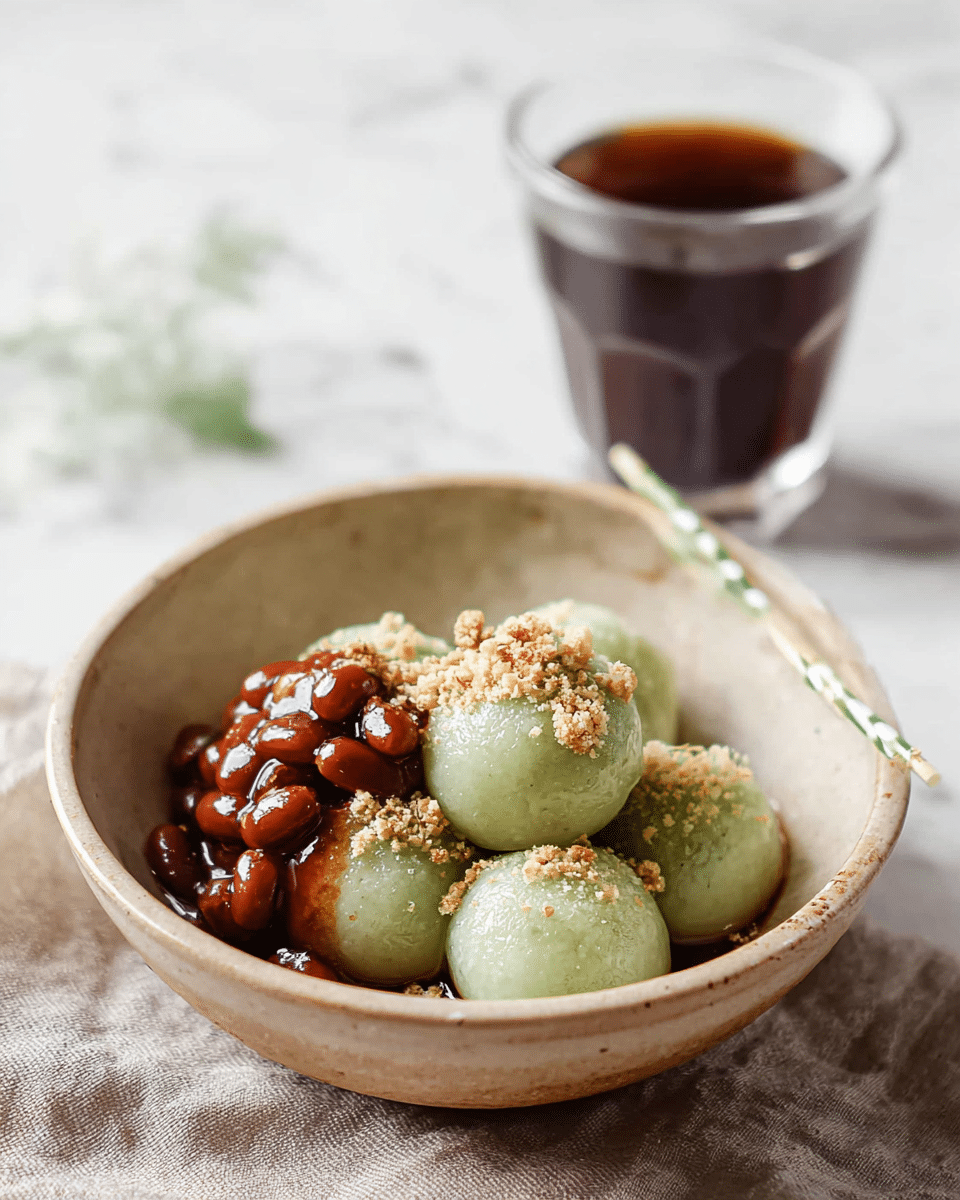
Yomogi Dango is a traditional Japanese sweet dumpling made with fresh mugwort (yomogi) that gives it a unique, earthy flavor. These chewy rice flour dumplings are served with sweet azuki bean paste and kinako powder, making a delightful and comforting treat.
Ingredients
- 1 kg yomogi (freshly picked)
- 1 tsp bicarbonate soda
- 2 litres water (for blanching)
- 200 g shiratamako (rice flour)
- 200 g silken tofu
- 2 tbsp yomogi paste
- 2 tbsp sugar
- 4 tbsp sweet azuki bean paste
- 4 tsp kinako soy bean powder
Instructions
- Step 1: Wash the yomogi thoroughly under running water, then drain well and set aside.
- Step 2: Bring 2 litres of water to a boil in a large pot, then add bicarbonate soda.
- Step 3: Add the yomogi to the boiling water and blanch for 1 minute.
- Step 4: Remove the yomogi using a strainer and soak them in cold water for 10 to 15 minutes.
- Step 5: Drain the yomogi again and process them in a food processor until smooth to make yomogi paste.
- Step 6: In a large bowl, combine the shiratamako, silken tofu, yomogi paste, and sugar. Knead the mixture with your hands until it reaches the softness of your earlobe.
- Step 7: Divide the dough into two equal parts. Roll each into a 2 cm diameter cylinder and cut into 16 equal pieces.
- Step 8: Shape each piece into a round ball by rolling between your hands.
- Step 9: Bring a large pot of water to a boil and add all the dumplings at once.
- Step 10: Cook until the dumplings float to the surface, indicating they are done.
- Step 11: Scoop the dumplings out and transfer to a bowl of cold water to cool.
- Step 12: Drain the dumplings and serve in small bowls topped with sweet azuki bean paste and a sprinkle of kinako powder.
Tips & Variations
- Substitute silken tofu with a similar amount of cooked mashed sweet potato for a different texture and flavor.
- Add a little matcha powder to the dough for a stronger green tea flavor and vibrant color.
- If fresh yomogi is unavailable, yomogi powder or dried mugwort can be used but adjust quantity to taste.
- Serve with a drizzle of kuromitsu syrup for an extra layer of sweetness.
Storage
Store any leftover dango in an airtight container in the refrigerator for up to two days. When ready to eat, gently steam or microwave them briefly to restore their chewy texture. Avoid boiling again as it may make them too soft.
How to Serve
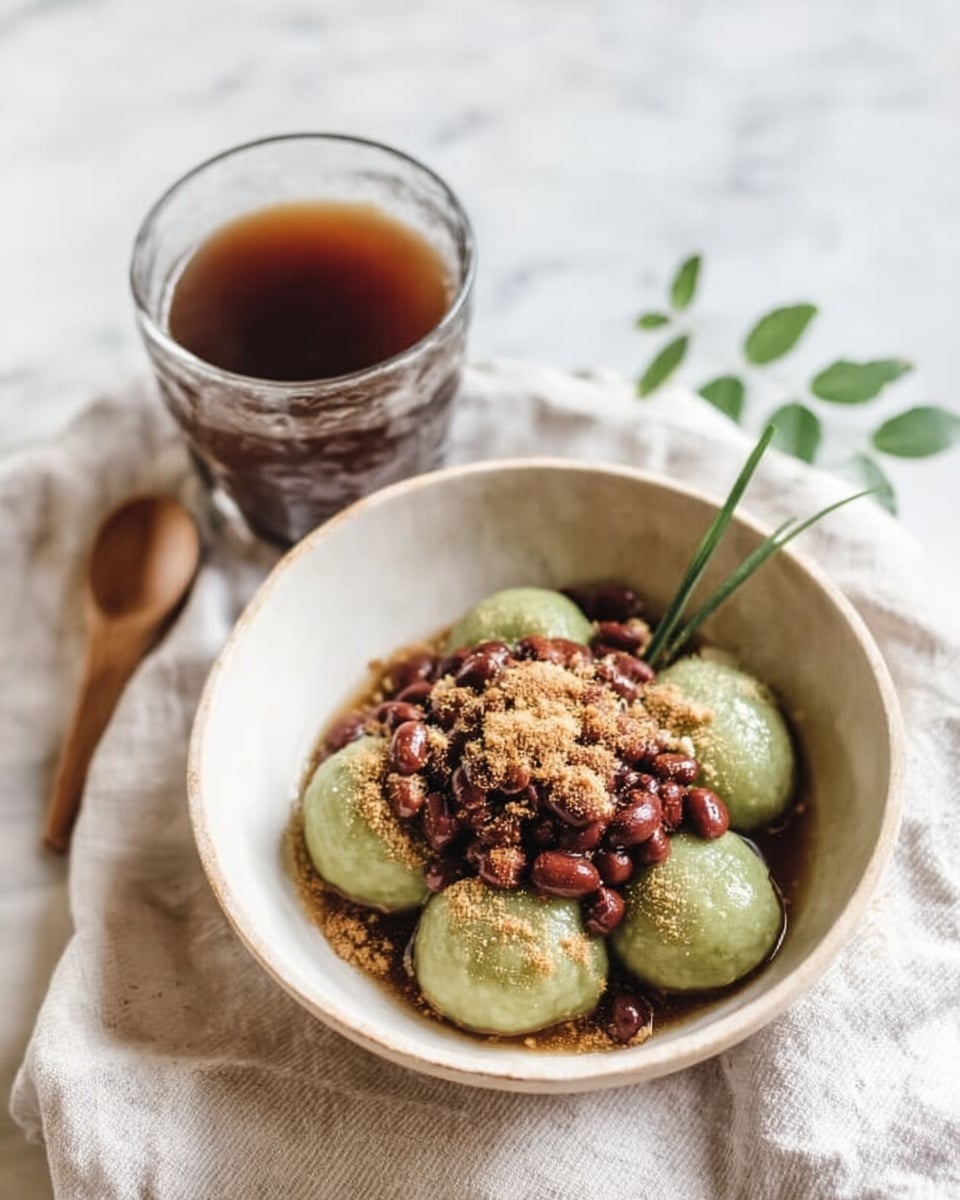
Serve this delicious recipe with your favorite sides.
FAQs
Can I use store-bought yomogi paste instead of fresh yomogi?
Yes, store-bought yomogi paste can be used as a shortcut. Adjust the amount according to taste since commercial pastes may be more concentrated.
What is the best flour to use for dango?
Shiratamako, a glutinous rice flour made from glutinous rice, is ideal for dango as it produces a soft and chewy texture. Mochiko (regular sweet rice flour) can be used but may yield a slightly different texture.
Print
Yomogi Dango with Azuki Bean Paste and Kinako Recipe
- Total Time: 55 minutes
- Yield: Approximately 32 dango pieces 1x
- Diet: Vegetarian
Description
Yomogi Dango is a traditional Japanese sweet dumpling made with fresh yomogi (mugwort), rice flour, and silken tofu. These chewy, green-hued dango are cooked by boiling and served with sweet azuki bean paste and kinako soy bean powder for a delightful balance of earthy and sweet flavors. Perfect as a seasonal treat, especially in spring when yomogi is freshly picked.
Ingredients
Yomogi Paste
- 1 kg yomogi (freshly picked)
- 1 tsp bicarbonate soda
- 2 litres water (for blanching)
Dango Dough
- 200 g Shiratamako (rice flour)
- 200 g silken tofu
- 2 tbsp yomogi paste
- 2 tbsp sugar
Serving
- 4 tbsp sweet azuki bean paste
- 4 tsp kinako soy bean powder
Instructions
- Prepare Yomogi Paste: Wash the freshly picked yomogi thoroughly under running water to remove any dirt and impurities, then drain excess water and set aside.
- Blanch Yomogi: Bring 2 litres of water to a boil in a large stockpot over high heat. Add 1 tsp bicarbonate soda to the boiling water, then add the yomogi leaves and blanch them for about 1 minute.
- Drain and Soak: Quickly transfer the blanched yomogi to a strainer to remove boiling water. Then soak the yomogi in cold water for 10 to 15 minutes to stop cooking and retain bright color.
- Drain and Process: Drain the soaking water using a strainer. Place the yomogi in a food processor and blend into a fine paste.
- Make Dough: In a large mixing bowl, combine the shiratamako rice flour, silken tofu, 2 tablespoons of the yomogi paste, and 2 tablespoons sugar. Knead the mixture by hand until the dough is soft and has the consistency similar to an earlobe.
- Shape Dough: Divide the dough into two equal portions. Roll each portion into a long cylinder about 2 cm in diameter, then cut into 16 equal pieces. Roll each piece between your hands to form smooth, round dumplings.
- Boil Dango: Bring a large pot of water to a boil over high heat. Add all the dango dumplings to the boiling water at once. When the dango float to the surface, they are cooked, usually within a few minutes.
- Cool and Serve: Use a slotted spoon to scoop the cooked dango into a bowl of cold water to chill. Drain before serving. Arrange the dango in small bowls, topping each with a dollop of sweet azuki bean paste and a sprinkle of kinako soy bean powder.
Notes
- Fresh yomogi is essential for authentic flavor and vibrant green color. If unavailable, frozen yomogi may be substituted but flavor will be milder.
- Bicarbonate soda helps preserve the bright green color of yomogi during blanching.
- Silken tofu makes the dango dough tender and moist; avoid firmer tofu types.
- Adjust sugar amount to your preference depending on sweetness of azuki bean paste.
- Serve dango immediately after cooking for best texture and flavor.
- Kinako soy bean powder adds a nutty aroma and complements the sweetness of the azuki paste.
- Prep Time: 40 minutes
- Cook Time: 15 minutes
- Category: Dessert
- Method: Boiling
- Cuisine: Japanese
Keywords: Yomogi Dango, Japanese dessert, dumplings, mugwort, shiratamako, azuki bean paste, kinako, traditional sweets, spring recipe